Pens
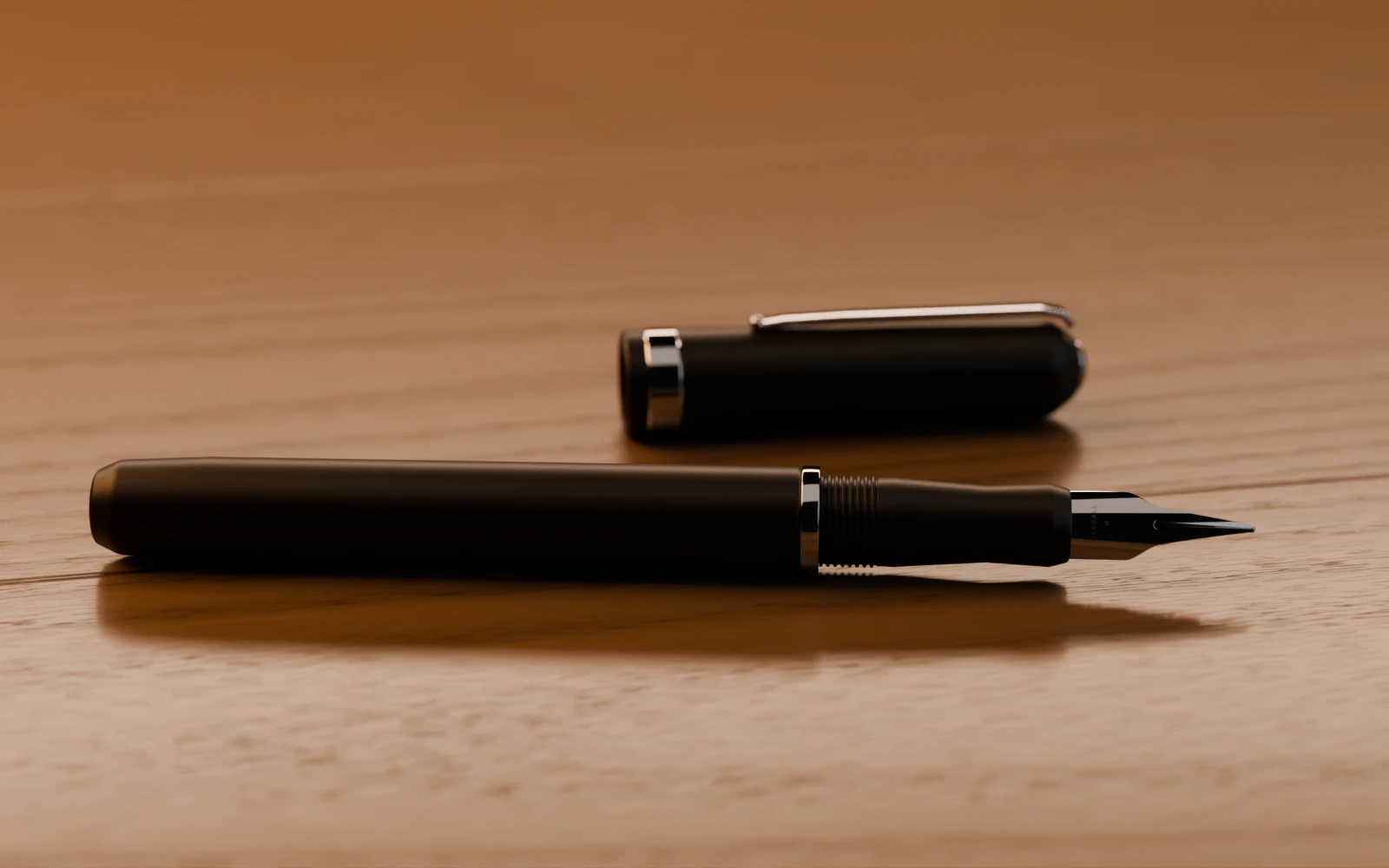
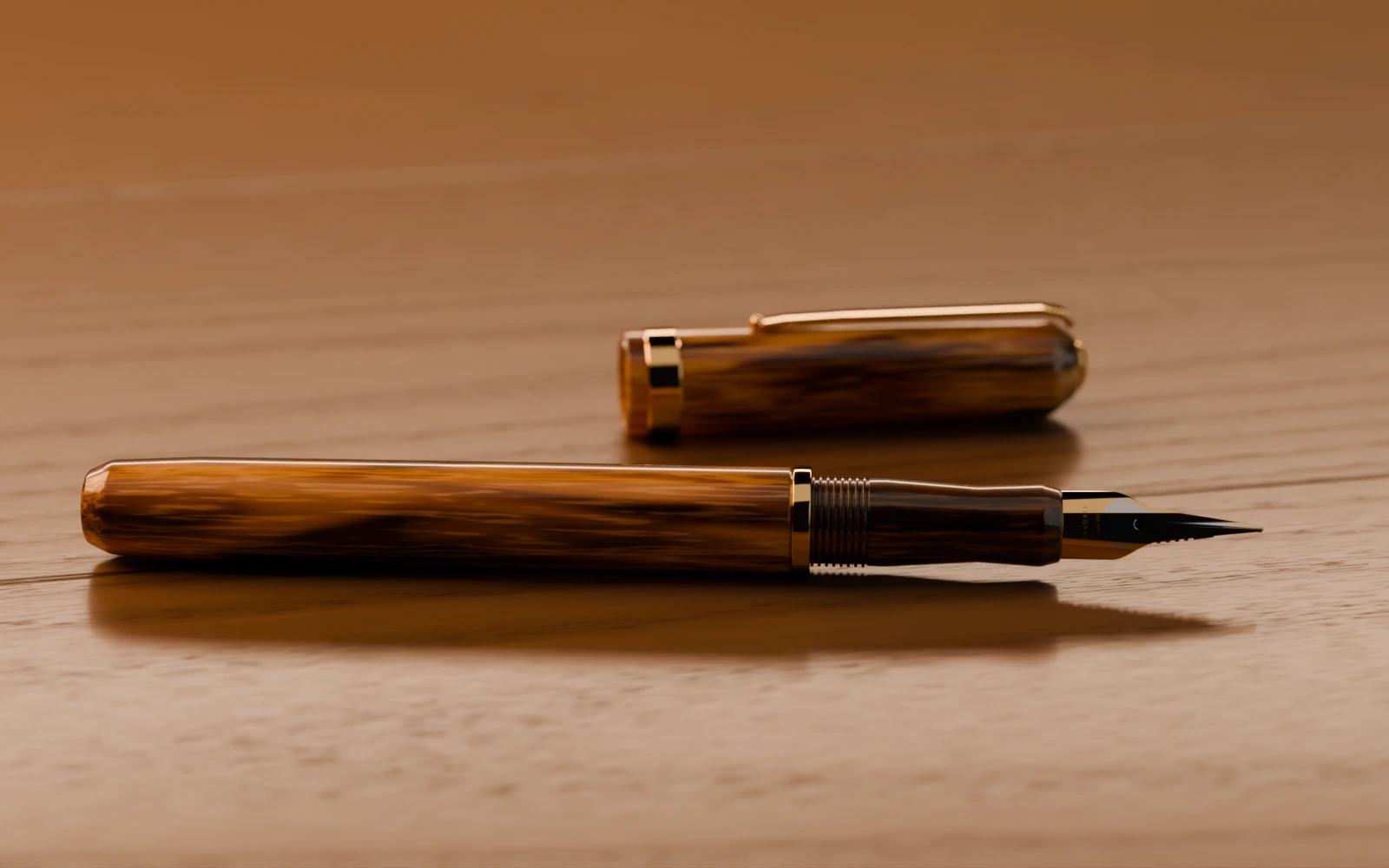
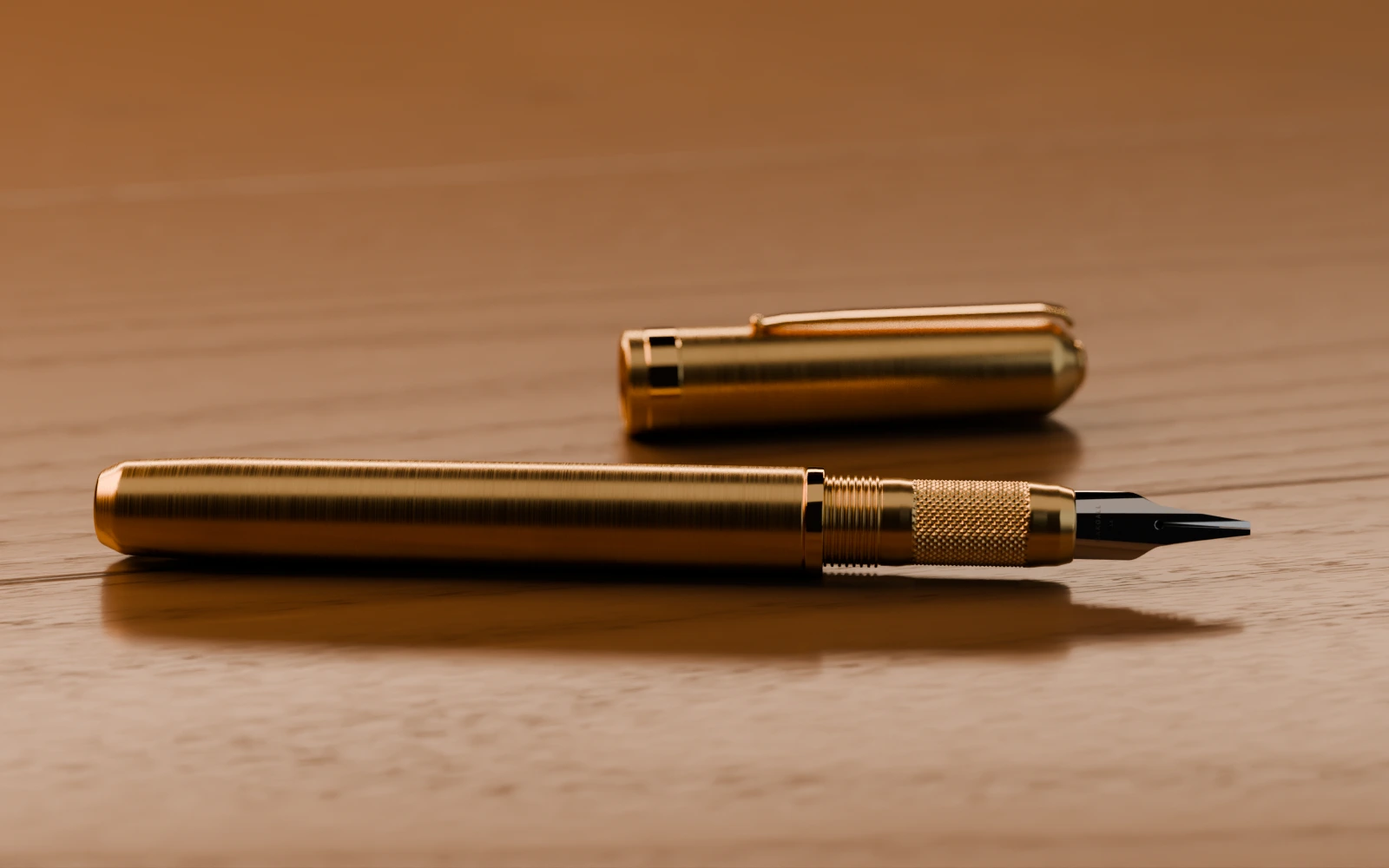
Three nibs that write three different ways. All three fill from the same bottles and clean with plain water.
Choosing a nib
Pick by the size of your handwriting and how much ink you want to see.
| Nib | Line | For |
|---|---|---|
| Ferrule EF | 0.32 mm | Small handwriting, margins, planners, thin paper |
| Ferrule F | 0.42 mm | Most people. Notes, letters, everyday writing |
| Ferrule M | 0.55 mm | Larger handwriting; shows an ink’s colour and shading |
| Burin Flex | 0.35 – 1.4 mm | A fine line that swells under pressure. Signatures, lettering |
| Reed Italic | 1.5 mm | Thick down-strokes, thin cross-strokes. Headings, cards |
Not sure? Write your name on the desk with each one. The nib you stop thinking about is the right one.
Ferrule EF0.32 mm
Ferrule F0.42 mm
Ferrule M0.55 mm
Burin, resting0.35 mm
Burin, pressed1.40 mm
Reed, down-stroke1.50 mm
Looking after a fountain pen
- Fill it, write with it, cap it when you stop. A capped pen keeps its ink for weeks.
- Every few weeks, or when you change ink, draw cool water through the nib until it runs clear.
- Dry the nib with a soft cloth. Store the pen nib up.
- No hot water, no soap, no solvents. Water does everything.